

The problem isn’t Google, it’s how legal searches work
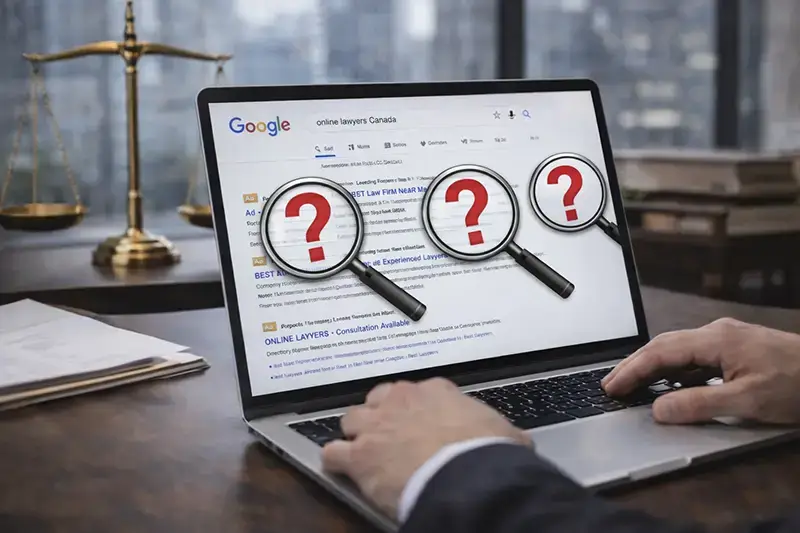
If you’re trying to find online lawyers Canada in 2026, Google is usually the first place you go. That makes sense: it’s familiar, fast, and it feels neutral. But legal needs are not like shopping for a product. Legal issues are category-sensitive, jurisdiction-sensitive, and time-sensitive. When those factors collide, “search results” can become a maze of ads, directories, outdated pages, and firms that don’t actually match your situation.
The core challenge is not that Google is “bad.” The challenge is that Google is designed to rank pages, not to understand your case context. That’s why people searching online lawyers Canada often end up spending hours comparing websites, second-guessing their choice, and still feeling uncertain about who they should contact.
In 2026, legal-tech and lawyer-matching platforms exist to reduce that uncertainty—not by replacing lawyers, and not by giving legal advice, but by making the discovery process more structured and more efficient.

What most people actually want when they search online lawyers Canada
When someone searches online lawyers Canada, they usually want one of three outcomes. They want to confirm the legal category they’re in, they want to connect with a lawyer who handles that exact type of problem in their province, or they want to understand the likely process and urgency level before they spend money on a consultation.
Google can help with general education. But it’s not optimized for matching you to the right professional quickly. That’s where comparison matters. In 2026, the best approach is often to combine Google’s breadth with a platform’s structure, especially when you need clarity fast.
How Google works for legal searches in 2026
Google rankings are driven by many factors, but from a user perspective, you mostly see the outcome: a mix of ads, map results, directories, and firm pages. For online lawyers Canada, this creates a few recurring problems.
First, ads can dominate high-intent searches. That doesn’t mean the advertiser is the best fit; it means they are bidding for the click. Second, law firm pages are written to be broad. A firm might list “Family Law” but your issue might be specifically parenting-time enforcement, an urgent motion, or an interprovincial matter. Third, directories may show listings without context, and you still have to do the work of filtering for practice area, location, availability, and fit.
So if you feel like Google gets you “close” but not “confident,” that’s normal. It’s also why lawyer-matching platforms have become a serious option for people searching online lawyers Canada.
What a lawyer-matching platform does differently
A modern matching platform isn’t trying to be “another directory.” The difference is the intake layer. When you search online lawyers Canada on Google, you begin with keywords and then guess the category. A matching platform begins with your situation and then uses structured prompts to categorize the issue, narrow down jurisdiction, and connect you with lawyers who practice in that area.
That shift is the real value. It reduces guesswork, lowers the risk of contacting the wrong firm, and turns “I need a lawyer” into “I need a lawyer for this specific category in this specific jurisdiction, and I want to contact someone who actually handles it.”
When Google is still the best option
Google remains useful for early-stage learning. If you’re not sure what the issue is, Google can help you understand terminology, typical steps, and general expectations. For example, someone searching online lawyers Canada might also search for “severance pay Canada,” “traffic ticket Ontario,” or “visa refused Canada.” Google is strong for that educational phase.
Google is also useful for verifying a lawyer’s profile, reading reviews carefully, and checking credibility signals. Even if you use a matching platform, most people still use Google as a second step to confirm they feel comfortable.
In other words, the best approach in 2026 is often not “Google or platform,” but “platform for fit, Google for verification.”
Where matching platforms outperform Google for online lawyers Canada
The reason matching platforms can outperform Google for online lawyers Canada is simple: legal needs are structured. A platform can ask what Google can’t. It can clarify whether your matter is federal or provincial, whether it involves a deadline, whether it belongs under immigration, employment, family, criminal, real estate, or business law, and whether you need a local lawyer or someone who can serve you remotely.
This matters because the biggest cost in legal discovery is not money at first—it’s wasted time and misdirected outreach. When you search online lawyers Canada and contact three firms who don’t handle your exact situation, you lose days. Platforms are designed to cut those dead ends down.
The credibility step you should never skip
Whether you found online lawyers Canada through Google or through a platform, there’s one credibility step you should always do: verify the lawyer’s licensing status through a reputable source such as provincial or territorial law society directory. This is basic due diligence and it helps reduce risk.
A practical comparison: speed, fit, and friction
If you’re comparing Google to a matching platform for online lawyers Canada, the real difference is friction. Google gives you a large set of choices, but it makes you do the sorting. A matching platform reduces the choice set by clarifying category and jurisdiction first.
Speed matters when you’re under stress. Fit matters because legal services are specialized. And friction matters because people abandon the search when it feels too complicated. In 2026, the platforms winning trust are not the ones that promise outcomes. They’re the ones that make it easier to find the right category and contact the right professional without wasting time.
How Olanur fits into this picture
Olanur is built for the moment when someone wants online lawyers Canada but doesn’t want to guess which type of lawyer they need. Olanur helps users describe their issue in plain language, identifies the relevant legal category, and then displays independent, licensed Canadian lawyers who practice in that category so users can choose who to contact and find a lawyer in Canada. Olanur is a technology platform, not a law firm, and it does not provide legal advice. Lawyers remain independent and responsible for their services, fees, and outcomes.
The key is that Olanur aims to reduce uncertainty and wasted outreach. That is exactly where many people get stuck when searching online lawyers Canada on Google.
Why this matters for lawyers, too
This topic isn’t only about clients. It’s also about how online lawyers Canada are discovered. Many lawyers and firms receive inquiries that are low-fit because the client guessed the category from a Google search. That leads to time-consuming intake calls that don’t convert.
A platform like Olanur can improve intake quality by capturing context upfront and sending lawyers leads that are closer to their actual practice area. It’s not about volume; it’s about relevance.
The “best of both worlds” workflow in 2026
For many people searching online lawyers Canada, the most effective workflow looks like this: use a matching platform first to confirm the category and identify a short list of relevant lawyers, then use Google to verify reputation signals, office details, and public profiles, then contact the lawyer with a clean summary and documents ready.
This workflow reduces anxiety because it replaces endless browsing with a structured decision path. It also improves outcomes in a practical sense: not outcomes in court, but outcomes in the discovery process. You spend less time lost and more time speaking with the right professional.
A real-world scenario that shows why matching can beat search
Imagine a user searching online lawyers Canada because they were laid off and believe they were treated unfairly. Google results might include general employment pages, blogs, and ads. The user still has to determine whether they need wrongful dismissal counsel, an ESA-focused approach, a severance negotiation, or something else. A matching flow can capture key facts quickly, point them toward the right category, and help them connect with lawyers who actually handle that type of matter in their province.
This is exactly why a related employment-law guide can strengthen trust and reduce bounce, because it helps users self-identify the correct category before contacting anyone. you can check out the article about employment lawyers in Canada to more about the ultimate solution.
What to watch for so you don’t waste time when searching online lawyers Canada
In 2026, people searching online lawyers Canada should be cautious about three common traps. The first is confusing ads with best-fit results. The second is assuming a firm that ranks for a keyword is necessarily specialized in your exact sub-issue. The third is relying on generic directories without verifying licensing and jurisdiction fit.
That’s why the most trust-first approach is to narrow the category first, then verify credentials, then contact the right lawyer with a clear summary. Platforms can help with the first step. Law society directories help with verification. And your preparation helps the consultation become productive.
Closing takeaway
If you’re searching online lawyers Canada in 2026, Google is still a useful starting point for education and verification, but it’s not always the fastest route to a confident match. Lawyer-matching platforms can reduce friction by clarifying category, jurisdiction, and fit before you contact anyone. The result is typically less wasted outreach and a more productive first conversation.
If you want to see the client-side workflow, go to Find a Lawyer in Canada. If you’re a lawyer who wants to understand how structured intake can improve lead quality, go to For Lawyers.