

Tax season in Canada is stressful enough without the fear of receiving a letter from the Canada Revenue Agency (CRA). For most Canadians, filing taxes is a routine yearly obligation. But when issues arisem such as audits, penalties, reassessments, or allegations of tax misconduct, the situation can quickly become serious.
Many people assume they only need a tax lawyer if they are being charged with tax fraud or evasion. In reality, there are several situations when to hire a tax lawyer in Canada in early stages can prevent a manageable issue from turning into a major financial or legal problem.
As we move through the 2026 tax season, more Canadians are searching for answers about when professional legal help is necessary. Understanding when to hire a tax lawyer in Canada can protect your finances, your business, and in extreme cases, your personal freedom.
This guide explains the most common warning signs that you may need a tax lawyer and how legal advice can help resolve disputes with the CRA before they escalate.

Why CRA Disputes Are More Serious Than Most People Think
The Canada Revenue Agency has extensive authority to investigate tax filings, assess penalties, and collect unpaid taxes. When the CRA believes a taxpayer has made a significant error, or intentionally misreported information, it can impose financial penalties, interest charges, and additional assessments that may dramatically increase the amount owed.
In certain situations, the CRA may also pursue enforcement actions such as wage garnishments, asset seizures, or freezing bank accounts. According to the Government of Canada’s tax compliance guidelines, the agency has broad legal powers to enforce tax collection and ensure compliance with the Income Tax Act. You can learn more about these enforcement powers directly from the official CRA website.
While asking when to hire a tax lawyer in Canada, although most tax disputes never reach criminal prosecution, they can still become financially devastating without proper representation. This is why many individuals and businesses turn to tax lawyers when dealing with serious CRA issues.
The Difference Between a Tax Accountant and a Tax Lawyer
One of the most common misconceptions when to hire a tax lawyer in Canada is that accountants and tax lawyers serve the same role. While accountants are essential for preparing and filing tax returns, their responsibilities are primarily focused on financial reporting and compliance.
Tax lawyers, on the other hand, specialize in legal disputes with the CRA. They understand how tax law is interpreted, how the CRA conducts investigations, and how to challenge government decisions through legal procedures.
In situations involving penalties, audits, investigations, or disputes over tax liability, legal expertise may be necessary to protect your rights.
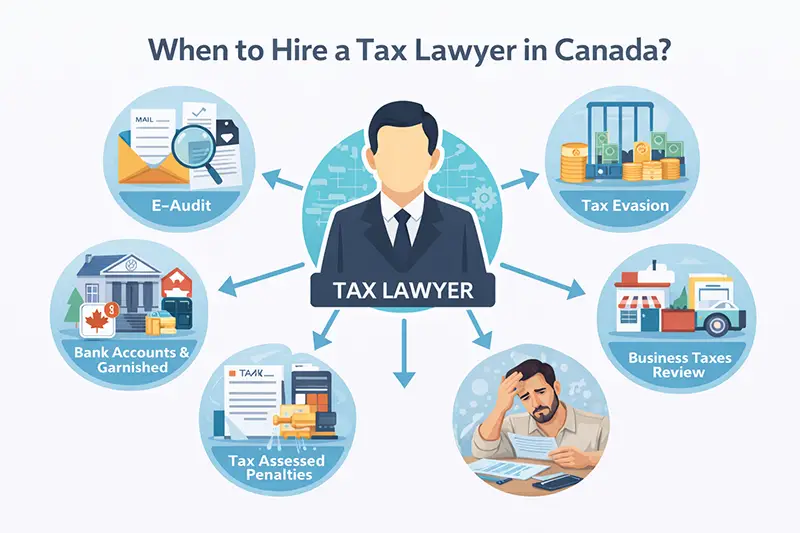
Warning Sign #1: You Receive a CRA Audit Notice
A CRA audit does not automatically mean wrongdoing. The agency audits thousands of tax returns every year to verify information and ensure compliance.
However, when asking when to hire a tax lawyer in Canada, audits can quickly become complicated if discrepancies appear in financial records, business expenses, or income reporting. During an audit, the CRA may request extensive documentation and ask detailed questions about financial activities.
Understanding the common triggers behind audits can help taxpayers recognize when the situation may require legal guidance. If you want to understand the most common reasons audits happen, our detailed guide explains the issue in depth:
If an audit begins uncovering inconsistencies or large adjustments, hiring a tax lawyer can help you respond strategically and avoid making statements that could later be used against you.
Warning Sign #2: The CRA Issues Significant Penalties
Another clear sign answering when to hire a tax lawyer in Canada is when the CRA imposes financial penalties on a tax return. These penalties can arise from several situations, including late filing, inaccurate reporting, or failure to disclose income.
The penalties themselves can grow quickly because interest is often added daily on outstanding balances. In more severe cases, the CRA may accuse taxpayers of gross negligence or misrepresentation, which can significantly increase financial liability.
If you want a detailed explanation of how CRA penalties work and how they are calculated, our full guide covers this topic here:
A tax lawyer can challenge penalties, negotiate settlements, or argue that the penalties were applied unfairly based on the circumstances of the case.
Warning Sign #3: You Receive a CRA Reassessment
After reviewing a tax return, the CRA may issue a Notice of Reassessment if it believes the original return contained incorrect information. This reassessment may increase the taxes owed and add interest and penalties.
Many Canadians assume reassessments cannot be challenged, but that is not always true. Taxpayers have the legal right to dispute CRA decisions through formal objection procedures and appeals.
However, while asking when to hire a tax lawyer in Canada responding incorrectly or missing deadlines can make disputes significantly more difficult. When reassessments involve large amounts or complex financial issues, legal advice can be extremely valuable.
Warning Sign #4: The CRA Is Investigating Possible Tax Evasion
Tax evasion investigations are rare but serious. In these cases, the CRA may suspect intentional attempts to avoid taxes, such as failing to report income, using offshore accounts improperly, or falsifying financial records.
According to the CRA’s enforcement policies, tax evasion cases can lead to criminal charges, large fines, and even prison sentences in extreme circumstances. More information about tax evasion enforcement can be found through the Department of Justice Canada.
If there is any indication that a tax investigation may involve allegations of fraud or evasion, contacting a tax lawyer immediately is critical.
Warning Sign #5: The CRA Is Taking Collection Actions
When taxes remain unpaid for extended periods, the CRA may begin aggressive collection actions. If you are facing imminent garnishment or a frozen account, see how to find a lawyer in Canada urgently. These actions can include wage garnishments, freezing bank accounts, or placing liens on property.
Once collections begin, resolving the situation becomes more urgent. Tax lawyers can negotiate payment arrangements, challenge improper enforcement actions, and help taxpayers avoid losing assets unnecessarily.
Warning Sign #6: Your Business Is Facing a CRA Review
Business owners face additional risks during tax season because corporate taxes, payroll deductions, and GST/HST filings all create potential areas for scrutiny.
CRA business audits often examine expense deductions, employee classification, and tax remittances. Even small reporting errors can trigger costly reassessments or penalties.
For business owners, having legal representation early in the process can help manage communications with the CRA and reduce exposure to unnecessary liability.
Warning Sign #7: You Simply Feel Overwhelmed by the CRA Process
Many people contact tax lawyers not because they are accused of wrongdoing, but because the CRA process feels overwhelming.
Letters from the CRA often contain technical legal language and strict deadlines. Without understanding how the system works, taxpayers may unintentionally provide incomplete or incorrect information.
Legal guidance can help ensure that communications with the CRA are clear, accurate, and strategically structured.
How a Tax Lawyer Can Help Resolve CRA Disputes
While asking when to hire a tax lawyer in Canada, a tax lawyer’s role is not only to defend clients but also to navigate the complex legal framework surrounding Canadian tax law. Depending on the situation, a tax lawyer may assist with negotiating settlements, filing formal objections, challenging reassessments, or representing clients in court if necessary.
Many disputes are resolved long before reaching litigation. Early legal advice often leads to more favorable outcomes because responses to the CRA can be carefully structured and supported with the correct legal arguments.
For individuals currently dealing with tax problems, finding the right lawyer quickly can make a major difference. If you are unsure where to begin, you can explore options to connect with qualified legal professionals through Olanur’s lawyer matching platform:
Frequently Asked Questions
When to hire a tax lawyer in Canada?
You should consider hiring a tax lawyer in Canada if the CRA has issued penalties, begun an audit, reassessed your taxes, or initiated collection actions such as wage garnishment or bank account freezes.
Can a tax lawyer reduce CRA penalties?
In some situations, tax lawyers may challenge CRA penalties by arguing that they were applied incorrectly or unfairly. They can also negotiate settlements or apply for relief programs depending on the circumstances.
What happens if you ignore CRA notices?
Ignoring CRA notices can lead to escalating consequences including additional penalties, interest charges, and enforcement actions such as wage garnishments or asset seizures.
Is it expensive to hire a tax lawyer in Canada?
Costs vary depending on the complexity of the case. Some lawyers offer consultations to review the situation and explain available options before proceeding with representation.
Can the CRA send someone to jail for tax evasion?
Yes. In serious cases involving intentional tax evasion, Canadian law allows criminal prosecution which may lead to significant fines or imprisonment.
Related guides
- Tax lawyer Canada: critical guide for the 2026 tax season
- Tax law & tax lawyers in Canada: 7 situations where legal help matters
- How to find a lawyer in Canada (2026 step-by-step)
- Need a lawyer now? 7 fast ways to find one urgently
- How to find a trustworthy lawyer in Canada
Final Thoughts
For most Canadians, dealing with the CRA is a routine part of tax season. But when audits, penalties, or investigations appear, the situation can escalate quickly. If you are not sure where to start, our broader guide on how to find a lawyer in Canada walks through the full process step by step.
Knowing when to hire a tax lawyer in Canada is essential to protecting your financial future. Whether the issue involves a reassessment, a dispute over penalties, or a complex investigation, legal guidance can help ensure the problem is handled properly.
If you believe your tax situation may require legal support, you can explore your options and connect with qualified lawyers through Olanur’s platform here:
While asking when to hire a tax lawyer in Canada, getting the right advice early can often make the difference between a manageable tax dispute and a costly legal battle.
Written by Olanur Research Team