

When something legal pops up in your life, your first question usually isn’t “Which lawyer should I hire?”, it’s “Do I need a lawyer for this?” In 2026, Canadians have more online legal information, AI tools, and platforms than ever, but that also makes it harder to know when professional legal help is genuinely necessary and do i need a lawyer in canada for this?
This guide walks through the most common real‑world situations where getting a lawyer early can protect your rights, save money, and prevent long‑term damage. You’ll also see a few scenarios where you may be fine starting with self‑help, public resources, or a platform like Olanur before you spend money on legal fees.
Why “Do I Need a Lawyer?” Matters So Much
Most people in Canada only deal with a handful of legal issues over their entire lifetime, so it’s normal to be unsure about when to involve a professional. You might be worried about cost, about “over‑reacting,” or about making a conflict worse by bringing in a lawyer too soon.
The problem is that many legal issues become harder and more expensive to fix the longer you wait. that’s where “Do I need a lawyer” becomes a time-taking decision, yet dangerous! Deadlines pass, evidence disappears, and documents get signed that are nearly impossible to unwind later. The aim of this article isn’t to scare you into calling a lawyer for every problem; it’s to help you recognize the situations for do i need a lawyer? where getting advice early is a smart, protective move.
11 Situations Where You Probably Do Need a Lawyer in Canada
1. You’re Facing Criminal Charges or an Investigation
If police have charged you with an offence or told you that you are under investigation, you should speak to a Criminal Defence Lawyer as soon as possible. Anything you say to police, employers, or even friends can end up being used in your case. A lawyer can advise you on your rights, help you decide what to say (and what not to say), and guide you through bail, disclosure, and court appearances.
2. You’ve Been Sued or Received a Serious Demand Letter
If you receive a Statement of Claim, court papers, or a well‑drafted demand letter threatening legal action, timelines matter. Ignoring these documents can lead to default judgments and wage or account garnishments. A litigation or dispute‑resolution lawyer can review the documents, explain your options, and help you respond properly so you don’t lose by doing nothing.
3. You’re Dealing With Job Loss or a Major Change at Work
Being fired, “asked to resign,” laid off, or pushed to sign a new employment contract can have long‑term financial consequences. An Employment lawyer can review your contract, help you understand whether a dismissal was wrongful, and negotiate fair severance or settlement. Getting advice before you sign or accept a package often makes a significant difference in what you walk away with. asking “Do I need a lawyer” can help you get your fair settlement and let the employer compensate the wrong approach.
4. You’re Separating, Divorcing, or Sorting Out Parenting Arrangements
Asking “Do I need a lawyer” is crucial in this type of matter. Separation and divorce affect your kids, your home, support payments, and long‑term finances. Informal agreements you make under stress may not be enforceable or fair. A Family Lawyer can help you understand your rights, negotiate a realistic agreement, and document it properly so courts and agencies will recognize it if problems arise later.
5. You’re Buying or Selling Property (or There’s a Title Problem)
Real estate transactions involve large amounts of money, strict dates, and complex documents. In Canada, lawyers typically handle title searches, mortgage instructions, registration, and closing funds. A Real‑estate lawyer can spot issues like liens, easements, or title defects before they become costly and can guide you if something goes wrong close to closing.
6. Your Immigration Status, Visa, or PR Is at Risk
If you receive a refusal, delay, procedural fairness letter, or removal risk, immigration law becomes very time‑sensitive and technical. An Immigration Lawyer can assess why things went wrong, prepare strong responses, and help with appeals or re‑applications. Because immigration decisions can affect your future travel, work, and family plans, getting advice early is crucial.
7. Your Business Is Signing a High‑Stakes Contract or Raising Money
Whether you’re incorporating a startup, bringing on investors, or signing a major client, the terms you agree to now can shape your business for years. A business or corporate lawyer can structure your company, review or draft contracts, and negotiate terms on things like intellectual property, non‑competes, and ownership so you don’t accidentally sign away control or revenue.
8. There’s a Serious Dispute Over a Will, Estate, or Inheritance
Estate disputes combine grief, family relationships, and complex law. If you believe a will is invalid, you’ve been unfairly left out, or an executor isn’t acting properly, an estate lawyer can explain your rights and remedies. Getting advice early helps you preserve evidence, understand deadlines, and decide whether negotiation, mediation, or court is the right path.
9. You Were Injured and Insurance Isn’t Treating You Fairly
After an accident or serious injury, insurance companies may delay, deny, or offer a settlement that feels too low. A personal‑injury lawyer can value your claim, negotiate with the insurer, and advise you about whether to settle or keep fighting. Because many of these lawyers work on contingency (they get paid only if they recover money for you), getting an initial opinion is often more affordable than people expect.
10. Government, Police, or a Regulator Is Involved
If your business or professional licence is under investigation, or you’re facing action from a regulator or government agency, the rules and timelines can be strict. Lawyers who focus on administrative or regulatory law can help you respond properly, prepare evidence, and represent you at hearings so you don’t accidentally worsen your position by saying the wrong thing.
11. You Feel Overwhelmed by the Documents and Stakes
Even if your situation doesn’t neatly fit any of the examples above, needing a lawyer can come down to how complex and risky things feel. If you’ve read the documents and still don’t understand what you’re agreeing to, or you’re losing sleep over what might happen, a short consultation with a lawyer can give you clarity and next steps. Sometimes, a one‑hour call early on prevents months or years of problems.
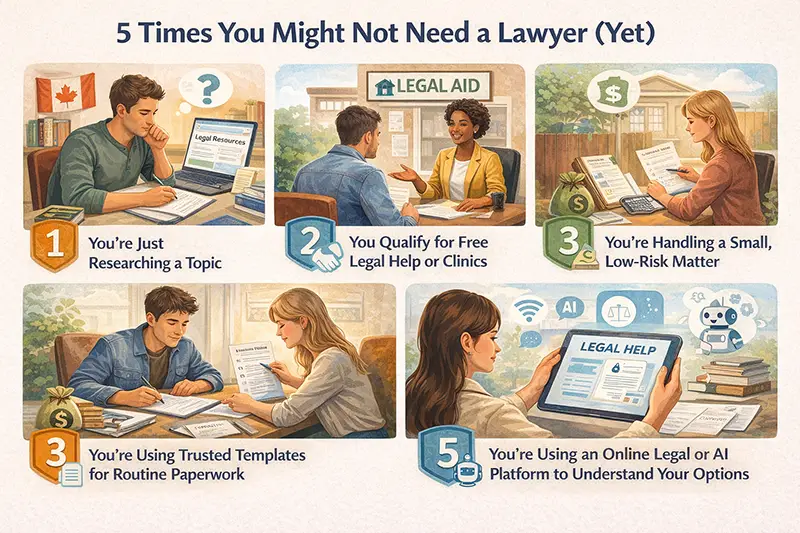
5 Times You Might Not Need a Lawyer (Yet)
When asking “Do I need a lawyer”, Not every legal‑looking problem requires paid representation right away. There are scenarios where you may be fine starting with legal‑information websites like the Canadian Bar Association’s legal resources, government pages, or reputable guides asking do i need a lawyer?
1. You’re Just Researching a Topic
If you’re only trying to understand a legal concept and there’s no active dispute, deadline, or document to sign, you may be fine starting with legal‑information websites, government pages, or reputable guides. The key is to make sure the information is Canadian and specific to your province or territory and you probably won’t ask “Do I need a lawyer?” yourself.
2. You Qualify for Free Legal Help or Clinics
In some provinces, community legal clinics, duty counsel, or student‑run legal services can give you basic guidance at low or no cost. These are especially helpful for early questions, initial document review, or understanding what your realistic options are before you seek a private lawyer.
3. You’re Handling a Small, Low‑Risk Matter
For very small‑value disputes or simple, low‑risk issues (like a minor consumer complaint or very small small‑claims matter), self‑help forms and guides may be enough if you’re comfortable reading and following instructions. You can still choose to consult a lawyer later if things become more serious.
4. You’re Using Trusted Templates for Routine Paperwork
For routine documents like a basic will, power of attorney, or simple contract between people you trust, you might start with a reputable template designed for your province. If the document later becomes central to a dispute, that’s the time to ask a lawyer to review or update it.
5. You’re Using an Online Legal or AI Platform to Understand Your Options
In 2026, more Canadians are using online platforms and AI tools to understand their rights before they ever contact a lawyer. These tools can help you categorize your issue, estimate risk, and see what types of lawyers usually handle similar problems. If your situation seems higher‑risk after that initial assessment for do i need a lawyer, that’s a strong sign you should speak with a real lawyer next.
How Olanur Helps You Decide, Before You Spend Money on Legal Fees
Olanur is built around the exact question this article answers: “Do I need a lawyer for this?” Instead of dumping you into a long directory of law firms, Olanur starts by helping you describe your situation in plain language.
You outline what happened, how urgent things feel, and what outcome you’re hoping for. Based on that, Olanur guides you toward the most relevant practice area, for example, employment, family, immigration, business, real estate, criminal, tax, or traffic matters, and suggests the type of lawyer who usually handles that kind of issue.
Because Olanur focuses on matching by problem type and context, you’re less likely to waste time contacting the wrong kind of lawyer or explaining your story over and over. You can move from confusion to a shortlist of appropriate legal options faster, with more confidence that you’re talking to someone who actually deals with situations like yours.
Questions to Ask Before You Hire Any Lawyer in Canada
Once you’ve decided that you probably do need a lawyer, the next step is choosing the right one. Before you sign a retainer, consider asking questions like:
- How much of your practice focuses on cases like mine?
- What are the realistic options and possible outcomes here?
- How do you charge (hourly, flat fee, contingency), and what are the likely total costs?
- Who will actually work on my file and how often will I hear from you?
- What are the biggest risks if I delay, settle early, or do nothing?
These questions, which regulatory bodies and law societies across Canada, including resources from the Canadian Bar Association — recommend asking yourself for do i need a lawyer, help you compare lawyers on more than just their hourly rate. They also give you a feel for communication style, expectations, and whether you feel comfortable trusting this person with your problem.
Here’s a simple way to put everything into action:
- Read through the 11 “you probably need a lawyer” scenarios and see which is closest to your situation.
- If your situation feels low‑risk right now, start with information and planning, but pay attention to deadlines and any official documents you receive.
- When you’re unsure or the stakes feel high, use Olanur to describe your problem and see which type of lawyer is recommended.
- When you contact a lawyer, use the question list above so you leave your first conversation with clear next steps and realistic expectations.
You don’t need a lawyer for every bump in the road, but when the stakes are serious, getting the right advice at the right time can protect your freedom, your family, and your future. Olanur’s role is to meet you at that first moment of uncertainty and help you move from “Do I need a lawyer?” to “I know what to do next.”
Final Take away
When you ask your self “Do I need a lawyer?”, There are situation where you may feel a lawyer can save things for you, or atleast make the process smooth, more reliable and risk free. but not every daily matter can be handled by a lawyer. If you are a lawyer looking for clients you can check For Lawyers and if you are a client looking for legal advise you can check out Find a Lawyer.