

In 2026, more Canadians than ever are publishing, designing, recording, filming, coding, and selling original work online. A photographer uploads client galleries to the cloud. A YouTuber posts long-form content and shorts. A startup writes website copy, designs product visuals, and launches a brand voice across multiple channels. A musician distributes tracks across streaming platforms. A SaaS founder pays freelancers to build graphics, landing pages, and ad creatives. Then one day, something feels wrong. Your content appears on another website. A former contractor claims ownership. A marketplace seller reuses your product photos. A business partner says the work belongs to the company, not you.
That is usually the moment people start searching for a copyright lawyer in Canada.

A lot of copyright issues begin quietly. They do not always start with a lawsuit. Sometimes they begin with a copied blog post, a stolen course, an unauthorized repost, a disputed licensing agreement, or a demand letter that lands in your inbox at the worst possible time. In those moments, the biggest risk is not only the infringement itself. The real risk is delaying the legal response until evidence disappears, deadlines tighten, revenue is affected, or the other side becomes more aggressive. There have been several cases that many unauthorized repost of contents on Instagram has been silently ignored and this led to mass repost of the content without the permission of the original creator.
This is why understanding when to contact a copyright lawyer in Canada matters. The right legal help can protect ownership, reduce exposure, clarify contracts, and prevent a manageable dispute from becoming a costly one.
Why copyright issues feel simple at first and expensive later
Many creators and business owners assume copyright law is straightforward. They think, “I made it, so I own it.” Sometimes that is true. Sometimes it is not that simple.
Under Canadian law, copyright generally protects original literary, dramatic, musical, and artistic works once they are created and fixed in a material form, and registration is not mandatory for protection to exist. At the same time, registration can still be valuable because it serves as evidence that copyright subsists and that the registered person is the owner, even though that evidence can still be challenged in court. If you need the official baseline, the Canadian Intellectual Property Office copyright guide and the Copyright Act are the right primary sources to consult.
Where people get burned is not usually on the idea of copyright. It is on ownership, licensing, scope of permission, enforcement strategy, and evidence. If a freelancer designed your logo but your agreement was vague, who owns what? If your employee created material during work, what rights were transferred? If you posted your work publicly, did you license a platform to use it in a certain way? If someone copied only part of your work, is that still infringement? If you want the content removed, should you send a takedown request, a cease-and-desist, a settlement proposal, or go straight to litigation counsel?
Those are not template-level questions. Those are legal strategy questions.

What a copyright lawyer in Canada actually helps with
A copyright lawyer in Canada does much more than sue people for copying content. In practice, copyright counsel often helps clients in four high-value situations.
The first is ownership clarification. This happens when work was created by employees, agencies, contractors, co-founders, or collaborators and nobody wrote the contract properly at the start. This is very common in businesses where websites, brand assets, photos, software documentation, videos, ad creatives, and educational material were produced quickly while everyone focused on growth.
The second is infringement response. Someone copied your article, reposted your videos, used your photos, scraped your course material, mirrored your product descriptions, or used your music without permission. A lawyer helps determine whether there is a real infringement claim, how strong the evidence is, and what remedy makes commercial sense.
The third is defence. Sometimes you are the one being accused. You may have licensed content through a third party, relied on a contractor’s representation, used material you believed was permitted, or assumed a use was covered by fair dealing. Getting early legal advice matters because the wrong response can strengthen the other side’s position.
The fourth is prevention. Smart businesses often involve a copyright lawyer before the dispute starts. They use legal review to tighten contracts, assign ownership properly, define licence scope, address moral rights waivers where appropriate, and reduce the chance of future conflict.
That preventive side overlaps with broader business law. If you run a company, Olanur’s article on business lawyers in Canada and the legal issues companies overlook is a strong companion piece because copyright problems often begin as contract problems.
The situations where you should seriously consider legal help
You should seriously consider speaking with a copyright lawyer in Canada when money, distribution, reputation, or control is at stake.
One common trigger is online content theft. If another business republishes your articles, copies your service pages, steals your product images, or uses your lead magnets and downloads, this is not only an annoyance. It can affect SEO performance, conversion rates, ad spend efficiency, and brand trust. In some cases, the copied work outranks the original. For agencies, publishers, creators, and e-commerce operators, that becomes a business problem fast.
Another major trigger is a licensing dispute. Many copyright conflicts do not involve total theft. They involve limited permission that was allegedly exceeded. Maybe a photographer licensed an image for one campaign but the brand reused it nationally. Maybe a company bought design work for one website but then repurposed it in paid ads, packaging, or franchise materials. Maybe a creator allowed reposting with attribution, but the work was modified or monetized beyond what was agreed.
A third trigger is a contractor or employee ownership conflict. Canadian businesses often assume payment equals ownership. It does not automatically work that way in every factual scenario. If your contracts are sloppy, or if the work was created across multiple contributors and revisions, ownership can become messy. That is especially dangerous during acquisitions, investor due diligence, rebranding, or partnership disputes.
A fourth trigger is platform-based misuse. Courses, templates, videos, audio, newsletters, ebooks, and digital memberships are now copied, clipped, resold, mirrored, and remixed constantly. Some disputes can be handled through platform reporting channels. Others require a more direct legal strategy, especially when the infringer is commercial, persistent, anonymous, or cross-border.
A fifth trigger is when a formal demand arrives. Once someone sends you a legal claim, a settlement request, or an allegation of infringement, this stops being a casual internet problem. From that point on, your wording, admissions, edits, and file preservation decisions matter.
Registration, moral rights, and fair dealing: three areas people misunderstand
A lot of Canadians still assume registration is required before a work is protected. That is not correct. Copyright generally exists automatically once the work is original and fixed. But registration can still strengthen your practical position because it creates evidentiary value in a dispute. That does not mean registration wins the case by itself. It means the file becomes cleaner and easier to present.
Moral rights are another area people miss. Under the Copyright Act, authors have moral rights tied to integrity of the work and attribution, and those moral rights cannot be assigned, although they can be waived in whole or in part. That matters in branding, design, publishing, and commissioned creative work because ownership of copyright and treatment of moral rights are not identical concepts.
Then there is fair dealing. People online often talk about “fair use,” but in Canada the statutory framework is fair dealing, and it is narrower and more structured. The Act expressly identifies purposes such as research, private study, education, parody, satire, criticism, review, and news reporting, subject to legal conditions and case-law analysis. That means not every “I gave credit” or “I only used part of it” argument works.
What enforcement can actually look like in Canada
Enforcement is not one single path. Depending on the facts, a copyright lawyer in Canada may recommend preserving evidence, documenting URLs and timestamps, reviewing contracts, sending a cease-and-desist, pursuing a negotiated licence fee, using a platform takedown process, or preparing for court action.
The Copyright Act also provides for statutory damages in certain cases, which is one reason legal advice can become important when the infringement is commercial or repeated. Even where litigation is not the goal, the availability of statutory remedies can affect leverage in settlement discussions.
Not every case should go to court. In many real-world files, the best outcome is commercial, not theatrical. You want the content removed, ownership clarified, money recovered, future use stopped, and business disruption minimized. A strong lawyer helps you decide whether the smarter move is to escalate, settle, license, or document and move on.
Why this matters more in 2026 than it did a few years ago
The copyright landscape feels hotter now because content creation has exploded while production chains have become blurrier. Businesses rely on freelancers, offshore contractors, AI-assisted drafting, repurposed creative, stock libraries, user-generated content, and multi-platform publishing. That increases speed, but it also multiplies ownership and permission risk.
Canada’s general copyright term is now life of the author plus 70 years, which means copyright remains an active asset for longer than many people realize. For companies building media libraries, evergreen content, educational products, music catalogues, branded assets, and digital publications, copyright is not a side issue. It is part of enterprise value.
This is one reason a search like “copyright lawyer in Canada” often comes from people who are not trying to be dramatic. They are trying to protect revenue, brand equity, and future leverage.
How to choose the right copyright lawyer in Canada
Not every lawyer who touches business law is the right fit for a copyright-heavy matter. You want someone who understands intellectual property disputes, commercial agreements, online misuse, and practical enforcement options. The right fit depends on whether your issue is mainly about infringement, ownership, licensing, platform misuse, publishing, media, software-adjacent work, or broader business structuring.
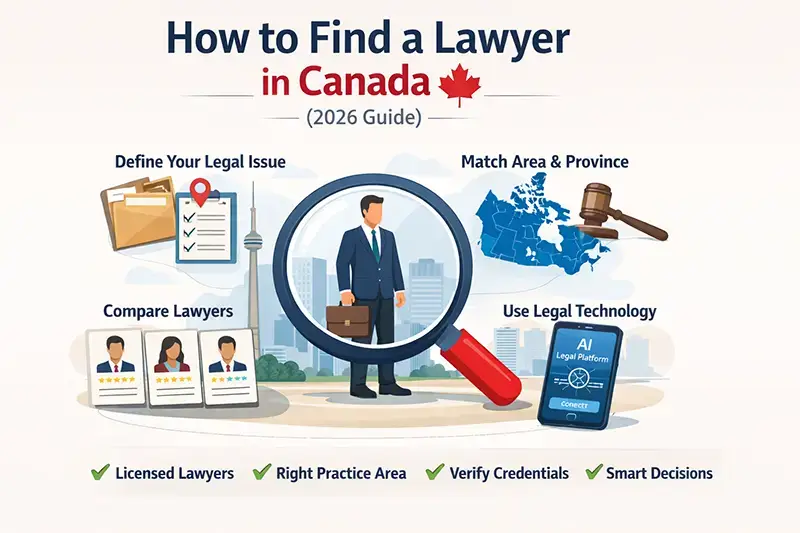
If your issue is urgent, Olanur’s article on how to find a lawyer in Canada urgently is useful. If you want a calmer verification-first approach, read find a trustworthy lawyer in Canada And if you are still unsure whether your situation is serious enough yet, do I need a lawyer in Canada in 2026? helps frame that decision properly.
Olanur’s role here is not to act as legal counsel. Its value is helping users identify the right legal category faster and connect with vetted Canadian lawyers based on fit, location, and issue type. That positioning aligns well with copyright matters because people often know they have a problem before they know what kind of lawyer they actually need.
Frequently Asked Questions
Do I need to register copyright before talking to a copyright lawyer in Canada?
No. In Canada, copyright generally arises automatically once an original work is created and fixed in a material form. Registration is optional, but it can still be strategically helpful as evidence in a dispute.
What kind of work can a copyright lawyer in Canada help protect?
A copyright lawyer can help with original written content, videos, music, artwork, photos, course materials, website copy, marketing assets, software-adjacent documentation, and many other original creative works that qualify for protection under Canadian law.
Can a copyright lawyer in Canada help if someone copied my content online?
Yes. That is one of the most common reasons people seek legal help. The response may involve evidence preservation, a takedown strategy, a cease-and-desist, settlement discussions, licensing demands, or litigation planning depending on the facts.
What is the difference between copyright ownership and moral rights?
Ownership relates to economic rights in the work, while moral rights relate to the author’s connection to the work, including attribution and integrity. In Canada, moral rights cannot be assigned, though they can be waived.
Is every copying dispute worth suing over?
No. Some cases are better resolved through negotiation, a platform complaint, or a targeted legal notice. A strong copyright lawyer in Canada helps determine whether the claim is commercially worth pursuing and what enforcement path makes sense.
Final thoughts
The worst time to learn when copyright lawyer in Canada is needed is after your content is stolen, your contractor relationship breaks down, or a legal demand lands in your inbox.
If you are dealing with copied content, ownership confusion, licensing overreach, or a formal infringement allegation, speaking with a copyright lawyer in Canada can save time, reduce damage, and protect leverage while the facts are still clean. For creators, founders, agencies, publishers, and growing brands, copyright is no longer a niche issue. It is an operating risk and, when handled properly, a real business asset.
That is where Olanur can fit naturally. Instead of opening dozens of tabs and guessing which legal category applies, users can describe the problem in plain language and move toward a better-fit lawyer faster. In copyright matters, speed and fit matter more than most people realize.