This article provides general information about record suspensions (pardons) in Canada as of November 2026 and is not legal advice. It was researched from the primary texts, read on 25 November 2026: the Criminal Records Act, R.S.C. 1985, c. C-47 (current to 29 October 2026), the Canadian Human Rights Act, the Immigration and Refugee Protection Act, Ontario's Human Rights Code, the Parole Board of Canada's application guidance and its Record Suspension Program Reports to Parliament (2018-19 to 2025-26), the RCMP's criminal record check pages, Global Affairs Canada's travel advice for the United States, and U.S. Customs and Border Protection and U.S. Department of State guidance. A licensed lawyer can advise on your own situation.
A record suspension Canada grants through the Parole Board is what the law called a pardon until 2012: an order that sets a criminal record apart so a routine police database search no longer shows it. The waiting period is the part everyone asks about, and it is easy to count wrong. The clock doesn't start at conviction or at sentencing. It starts on the day the last piece of the sentence ends, and the length of the wait depends on a date many people have to look up: when the first offence was committed.
That one detail decides whether you apply under rules from before 2010, from 2010, or from 2012, and in 2025-26 it meant most applications the Parole Board accepted were still processed as pardons under the older law. This guide walks through the three dates on your paperwork, the $50 application, what the suspension hides, and the places a suspended record can still surface. If the record is tangled up with an open charge, our guide to criminal lawyers in Canada covers what defence counsel does.
Record suspension Canada: what you can count on
A record suspension keeps a conviction separate from other criminal records once the sentence is complete and a waiting period of 3, 5 or 10 years has passed. The Parole Board decides, the fee is $50, and it does not erase the record or open the U.S. border.
- The wait runs from the end of the whole sentence. That means the last fine payment, the end of probation, and the end of any jail, parole or conditional sentence, under section 4 of the Criminal Records Act.
- Your first offence date picks the rulebook. Since 19 March 2020 the Parole Board applies the rules in force when your first offence was committed: 3 or 5 years before 29 June 2010, and 5 or 10 years from 13 March 2012.
- The application fee has been $50 since 1 January 2022. Fingerprints, court documents and police checks cost extra, and you can apply directly without a company or a lawyer.
- It hides the record from a CPIC search, not from everyone. Sexual offences stay flagged for vulnerable sector checks, and the U.S. does not recognize Canadian pardons.
- Simple cannabis possession has its own route, with no waiting period and no Parole Board fee.
Pardon or record suspension: why the old word is still on the paperwork
"Pardon" is the name the law used before 13 March 2012, and the Parole Board still uses it when your first offence came before that date. The effect for the applicant is the same: the record is kept separate.
Parliament replaced "pardon" with "record suspension" in 2012 and repealed the Criminal Records Act's definition of a pardon. For years the Parole Board applied the 2010 and 2012 changes to everyone, including people whose offences came earlier. On 19 March 2020 the Federal Court, in P.H. v. Canada (Attorney General), 2020 FC 393, declared those transitional provisions unconstitutional, finding they added to the punishment imposed at sentencing, as the Board's 2025-2026 Report to Parliament explains.
The result shows in the Board's own numbers. Of the 11,693 applications it accepted in 2025-26, 8,661 were processed as pardons under the earlier versions of the Act and 3,032 as record suspensions. So "pardon" and "record suspension" are the same door with two names on it, and which name your decision carries depends on the date of your first offence.
Three dates on your paperwork decide your wait
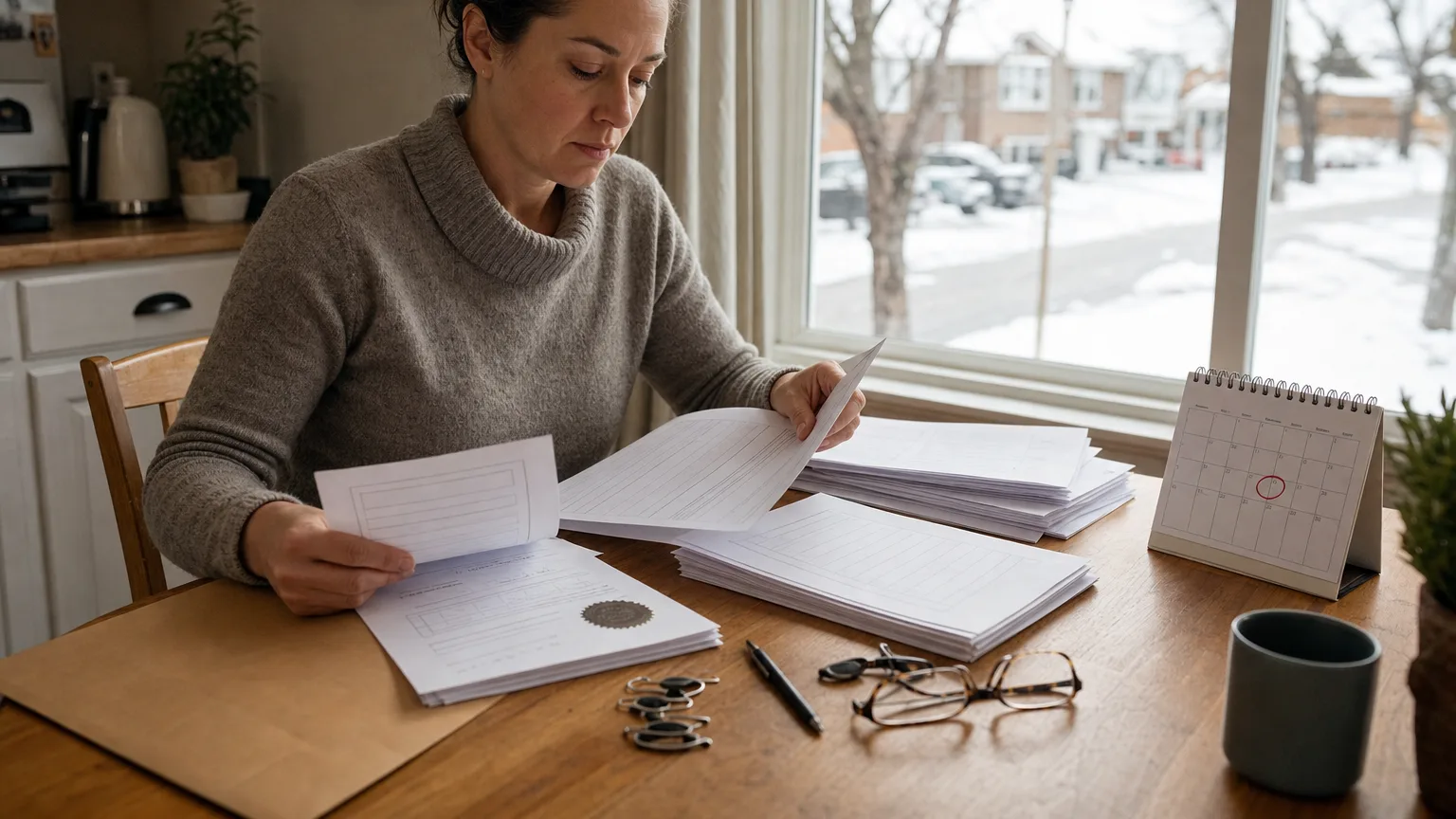
Three dates set the earliest day you can apply: when the first offence happened, how the Crown proceeded, and when the last part of the sentence ended. Get any one wrong and the file can come back.
Because the Criminal Records Act is federal, the rules for a record suspension Canada-wide are the same in Ontario, Alberta or Nova Scotia; only the courts and police services you collect documents from change.
| First offence committed | Prosecuted by indictment | Summary conviction | What the decision is called |
|---|---|---|---|
| Before 29 June 2010 | 5 years | 3 years | Pardon |
| 29 June 2010 to 12 March 2012 | 5 years (10 years for a serious personal injury offence with a sentence of 2 years or more, or a Schedule 1 offence) | 3 years (5 years for a Schedule 1 offence) | Pardon |
| On or after 13 March 2012 | 10 years | 5 years | Record suspension |
| Only simple possession of cannabis | No wait | No wait | Record suspension, no fee |
Record suspension Canada waiting periods from the Parole Board of Canada's eligibility page and the Criminal Records Act, s. 4, as of November 2026.
Date 1: when the first offence was committed
This is the date of the act, not the date of sentencing or conviction. The Board's forms ask for conviction dates, but its FAQ says the file is assessed on the first offence date, and its eligibility page adds that the Board will try to find that date if you don't know it. Simple cannabis possession convictions are left out when that first date is worked out.
Date 2: how the Crown proceeded
Many common offences, such as assault and theft under $5,000, can be prosecuted either way under the Criminal Code, and the Crown chooses. Under the current rules that choice is the difference between a 5-year and a 10-year wait. If the court can't confirm which way the case went, the Board applies the longest period. Our guide to impaired driving in Ontario explains why that early Crown election matters so much in a drinking-and-driving case.
Date 3: the day the last part of the sentence ended
The clock starts only when everything is finished: every fine, cost, surcharge, restitution and compensation order paid in full, every term of jail, parole, statutory release or conditional sentence served, and every probation order expired. Three details trip people up:
- A driving or weapons prohibition doesn't have to be over. The Board says the waiting period can begin while a prohibition order is still running, and a suspension won't lift the prohibition either.
- Some victim surcharges are ignored. Surcharges imposed between 24 October 2013 and 13 December 2018 don't count toward eligibility.
- Long-term supervision isn't counted. Section 4.01 leaves any period under a long-term supervision order out of the waiting period.
Consider a Hamilton warehouse worker convicted of theft under $5,000 for a shoplifting incident in May 2008, in a case the Crown took summarily. The last $100 of a $500 fine was paid on 15 October 2010. Because the first offence came before 29 June 2010, the Board now applies the old 3-year rule, so the waiting period ran out on 15 October 2013 and an application could go in today. (Before the 2020 court ruling, the Board would have applied the later 5-year rule.) Under those old rules, the Board's Report to Parliament notes, a pardon for summary-only convictions can be issued administratively rather than granted by a Board member.
Now say an office manager in London, Ontario, was convicted of assault for an incident in 2016 and finished 18 months of probation on 31 March 2019. If the Crown proceeded by indictment, the earliest date is 31 March 2029. If it proceeded summarily, the date is 31 March 2024. The facts are identical; a decision the Crown made years earlier moves the date by five years.
The date of the act, not the date of sentencing. It picks the rulebook.
Many offences can go either way. The court record shows which.
The latest of: the final payment of any fine, cost, surcharge, restitution or compensation order, the end of probation, and the end of any jail, parole or conditional sentence. Victim surcharges imposed from 24 October 2013 to 13 December 2018 don't count.
- The rule: Criminal Records Act s. 4(1)(b): 5 years after the whole sentence ends, for an offence punishable on summary conviction.
- After the Board accepts the file: at least 6 months by its own guideline for summary cases, and up to 24 months if it proposes to refuse. On that guideline, applying on the first eligible day, a decision would typically come no sooner than about 15 December 2026.
- Under the current rules a Schedule 1 offence (the sexual and exploitation offences involving children it lists) bars an application unless the narrow s. 4(3) exception is met, and so do more than three indictable offences that each drew 2 years or more.
- The application includes the Board's measurable benefit and sustained rehabilitation form, required for a first offence on or after 29 June 2010.
Who the law shuts out, and the narrow way back in
Under the current rules two groups can't apply at all: people convicted of a Schedule 1 offence, unless a three-part exception fits, and people with more than three indictable convictions that each drew 2 years or more.
Schedule 1 lists sexual and exploitation offences involving children. Section 4(3) of the Act lets a person with a Schedule 1 conviction apply only if the Board is satisfied of all three of these: they were not in a position of trust or authority over the victim and the victim was not dependent on them; they did not use, threaten or attempt violence, intimidation or coercion; and they were less than five years older than the victim. The applicant carries the burden of proving all three. The Board says these bars apply when the first offence was on or after 13 March 2012.
Two groups don't need a suspension at all. Someone who received only an absolute or conditional discharge doesn't need one: for discharges since 24 July 1992, the RCMP removes absolute discharges from its system after one year and conditional discharges after three. Someone found guilty only in a youth court doesn't need one either, because those records are destroyed or archived once the periods under the youth justice laws run out. A youth record can come back into play if there was an adult conviction before that period ended, and then a suspension may need to cover both. A peace bond is also not a conviction, though our guide to peace bonds in Ontario explains why one can still print on some police checks.
What the Parole Board's own numbers show
Applications climbed 60% in the two years after the fee fell from $657.77 to $50 in January 2022, and of the 13,388 decisions the Board made in 2025-26, 97.5% ordered, issued or granted.
The Parole Board has to report its record suspension numbers to Parliament every year under section 11 of the Act. Read across twelve years of figures from those reports, two things stand out. Applications went from 10,978 in 2021-22 to 16,121 the year after and reached 17,572 in 2023-24, the highest of the twelve years shown, which the Board puts down to both the lower fee and more people becoming eligible under the current Act. And the main hurdle is the paperwork, not the decision. In 2025-26 the Board sent back 4,042 of 15,809 applications at screening, and 80% of those went back for missing documents or payment.
The 97.5% figure deserves a careful reading. It counts decisions on files that already cleared screening, some received in earlier years, so it is not the chance that any application succeeds. It does show that files which clear screening are rarely refused.
Building the application, and where files stall
The Board's guide has ten steps, and three of them depend on other offices' timelines: the RCMP fingerprint check, court records for every conviction, and local police checks for everywhere you lived in the last five years.
The Parole Board's application page sets out the full sequence. In practice the package comes together roughly like this:
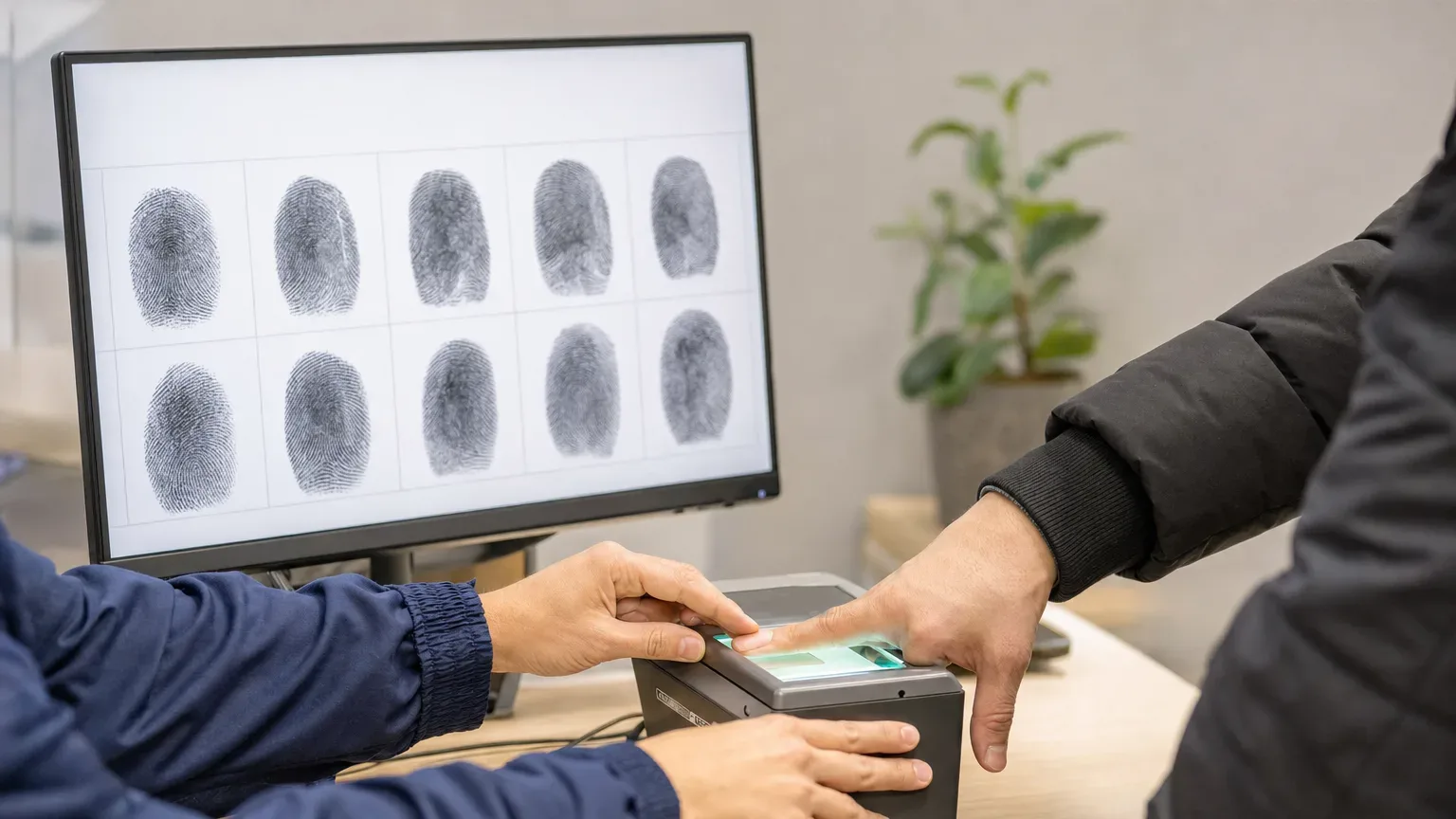
- Fingerprints and your RCMP record. Electronic fingerprints, taken by a police service or an RCMP-accredited company, marked as a record suspension request. When there may be a match to a criminal record, the RCMP estimates about 120 business days.
- Court information for each conviction. Each court that sentenced you completes the Board's Court Information Form, with proof and the date of the last payment of any fine or surcharge.
- Local police records checks. One from the police where you live now, and one from each place you lived for 3 months or more in the last 5 years. Each is valid for 12 months, so a slow court can make an early police check expire.
- The forms that are yours to write. The application, a copy of government ID, the Schedule 1 exception form if it applies, and the measurable benefit and sustained rehabilitation form, which is required when the first offence was on or after 29 June 2010. Military members and veterans also add a conduct sheet.
- Payment and consent. The $50 processing fee form and the consent and privacy form go in last.
Once the Board accepts the file as complete and eligible, its guideline is at least 6 months for summary offences and at least 12 months for indictable ones, and up to 24 months when it proposes to refuse, because it has to give you a chance to respond first. The Board also notes it is under operational pressure and that applicants should expect delays. Applications can't be fast-tracked for personal circumstances.
What a record suspension costs in 2026
The Parole Board charges $50, the RCMP adds a $25 federal fee, and the rest depends on who takes your fingerprints and what each court and police service charges.
| Item | Cost as of November 2026 | Source |
|---|---|---|
| Parole Board processing fee | $50, cannot be waived or reduced | Parole Board of Canada |
| RCMP federal fee for the fingerprint check | $25 | RCMP |
| Fingerprinting by police or an accredited company | Set by the agency, on top of the $25 | RCMP |
| Court documents and local police checks | Set by each court and police service | Parole Board of Canada |
| Cannabis possession only | No Parole Board fee | Criminal Records Act, s. 4(3.3) |
| Optional: a record suspension company | "Several hundred dollars to more than a thousand", on top of the $50 | Parole Board of Canada |
The Board is blunt about the last line. Its fraud warning says a company can only prepare your application, cannot speed it up or give it special status, and has no say in the decision. Some people still choose paid help, and that is their call to make once the price is clear. Before paying anyone, it costs nothing to check a lawyer's or paralegal's licence, and our guide to what a lawyer costs in Ontario explains how flat fees and hourly rates work.
What a suspension hides, and where the record still surfaces
A record suspension removes the record from a CPIC search and protects you on federal job forms and under human rights law. It does not touch vulnerable sector flags, prohibition orders or the U.S. border.
| Where the record could show | With a record suspension |
|---|---|
| A police search of CPIC, Canada's national police database | Doesn't show a record or a suspension |
| Federal government, Crown corporation, Canadian Forces or federally regulated job forms | A question can't require you to disclose it (s. 8) |
| Federal human rights complaints | A suspended conviction is a protected ground (Canadian Human Rights Act, s. 3) |
| Immigration inadmissibility for permanent residents and foreign nationals | Can't be based on it (IRPA, s. 36(3)(b)) |
| Vulnerable sector check for a job with children or vulnerable people | Schedule 2 sexual offences remain flagged |
| Driving or weapons prohibition order | No effect |
| U.S. border | Not recognized |
| Applying for a passport | No suspension needed |
At the U.S. border
No record suspension Canada grants opens the U.S. border by itself. Global Affairs Canada's travel advice for the United States says plainly that a pardon issued by Canadian authorities is not recognized under U.S. law for entry, and that trying to enter without a waiver could mean weeks of detention and a permanent ban. The U.S. State Department's manual on criminal grounds says foreign pardons are "not effective for immigration purposes". A traveller found inadmissible can ask U.S. Customs and Border Protection for permission to enter on Form I-192. The Parole Board adds that if U.S. officials saw your record before it was suspended, they may already have it on file, and that questions about it are best answered honestly.
On a vulnerable sector check
Section 6.3 of the Act has the RCMP flag suspended records for the sexual offences listed in Schedule 2. When someone applies for a paid or volunteer position of trust or authority over children or vulnerable people, and consents in writing, the police can check for that flag. The record can then be released to the organization only with the Minister's approval and the applicant's written consent to the disclosure. The RCMP's vulnerable sector page adds that the check must be requested for a specific position, so applying for several such roles can mean several checks.
In Ontario workplaces
Ontario's Human Rights Code lists "record of offences" as a ground on which employers can't discriminate, defined as a conviction for an offence for which a pardon was granted under the Criminal Records Act and not revoked, or a provincial offence. The definition still uses the word "pardon", and section 24 allows an exception where the record is "a reasonable and bona fide qualification because of the nature of the employment". Provincial offences, such as the Highway Traffic Act charges in our guides to speeding tickets and stunt driving in Ontario, aren't criminal convictions and sit outside the federal record suspension system altogether.
How a suspension can be lost
A suspension can be revoked for a new summary conviction, for no longer being of good conduct, or for a false statement in the application. It ends automatically with a new indictable conviction, most new convictions for either-way offences under the Criminal Code or federal drug and firearms laws, or proof that you weren't eligible in the first place.
Revocation under section 7 is the Board's decision, and section 7.1 requires it to tell you first and consider what you say. Cessation under section 7.2 happens without that step. One carve-out matters for drivers: new convictions for impaired operation or refusing a demand (Criminal Code ss. 320.14(1) and 320.15(1)) are excluded from automatic cessation, though they can still lead to revocation. Either way, a record that is revoked or ceases goes back into CPIC. A cannabis-only suspension can't be revoked for conduct alone.
The cannabis-only route: no Board fee, no waiting period
If every conviction on your record is for simple possession of cannabis, the Act lets you apply at once, with no Parole Board fee, and the Board must order the suspension if the record qualifies.
Section 4(3.1) of the Act removes the waiting period and section 4(3.3) removes the Board's fee, though fingerprints, court documents and police checks still cost what they cost. Any jail or probation for the conviction has to be finished, but unpaid fines and victim surcharges for it don't block the application, though the government can still collect them later. The cannabis record suspension guide has its own application form. Uptake is small: the Board received 35 such applications in 2025-26 and ordered 20. If the record also holds another conviction, the cannabis conviction is set aside and the other offence decides the wait, and a fine imposed for the cannabis offence together with another offence has to be paid in full.
When it helps to talk to a lawyer
The Board built the process so people can file on their own. A lawyer earns the fee when the file has a legal question in it rather than a paperwork one.
- The Board proposes to refuse. You are entitled to make written representations, or oral ones with the Board's permission, and a refusal means waiting a year to re-apply.
- A Schedule 1 exception or a "more than three offences" question. Both turn on facts the applicant has to prove.
- The court can't confirm how the Crown proceeded, which could cost you five extra years.
- A suspension is being revoked, or you face a new charge while one is in place.
- Immigration status or U.S. travel depends on the outcome, where our guide to immigration lawyers in Canada shows how those cases tend to run.
If you are unsure whether your situation needs one at all, our guide on whether you need a lawyer in Canada walks through the questions to ask, and the Law Society Referral Service in Ontario offers a free consultation of up to 30 minutes.
How Olanur helps
We built Olanur so someone with a criminal record question can describe it once, in plain words, and be matched with a verified lawyer who handles criminal matters, without calling a list of offices first. Matching is free. Lawyers on our platform include criminal lawyers who handle refusals, revocations and the defence work that comes before any of this.
You can describe your situation on our criminal law page and see how matching works before you share anything personal.
Frequently asked questions
It depends on when your first offence was committed and how the Crown proceeded. For a first offence on or after 13 March 2012 the wait is 10 years for an indictable offence and 5 years for a summary one. Before 29 June 2010 it was 5 and 3 years, and the period in between has its own rules. The clock starts only when the whole sentence is finished, including fines and probation.
The Parole Board of Canada charges a $50 processing fee as of 2026, which cannot be waived. The RCMP charges a $25 federal fee for the fingerprint-based record check, plus whatever the police service or accredited company taking your fingerprints charges, and courts and local police may charge for documents. A record that holds only simple cannabis possession convictions has no Parole Board fee.
In practice, yes. "Record suspension" replaced "pardon" in the Criminal Records Act in 2012, but since a March 2020 Federal Court decision the Parole Board applies the rules in force when your first offence was committed. If that was before 13 March 2012, the Board still processes and names the decision as a pardon. Either way the record is kept separate from other criminal records.
Not on its own. Global Affairs Canada says a Canadian pardon is not recognized under U.S. law, and the U.S. State Department treats foreign pardons as not effective for immigration purposes. Someone with a criminal record who is inadmissible can apply to U.S. Customs and Border Protection for a waiver using Form I-192, and the Parole Board suggests contacting the port of entry before travelling.
It can for sexual offences. The Criminal Records Act has the RCMP flag suspended records for the offences in its Schedule 2, and when you apply for a position of trust or authority over children or vulnerable people, and consent, the police can check for that flag. Release of the record to the organization requires the Minister's approval. Other suspended records don't show on a CPIC search.
No. The Parole Board says you can apply directly using its application guide and forms, and that third-party companies, which charge from several hundred to more than a thousand dollars, cannot speed up an application or influence the decision. A lawyer helps most when the Board proposes to refuse, when a Schedule 1 exception is involved, or when a suspension is being revoked.
A record suspension Canada-wide is a federal order under the Criminal Records Act, made by the Parole Board of Canada, and the same waiting periods apply in every province. The Act itself governs records held by federal bodies such as the RCMP, but the Board says most provincial and municipal criminal justice agencies also restrict access to their records once they are told a suspension has been ordered.
After it accepts an application as complete and eligible, the Board's guideline is at least six months for summary offences and at least 12 months for indictable offences, and up to 24 months where it proposes to refuse. Before that, the RCMP fingerprint check can take about 120 business days when there may be a match to a criminal record, and the Board warns applicants to expect delays.
Before you order your fingerprints
A useful first step this week is to pin down the three dates: ask the court for the date of the first offence and how the Crown proceeded, and find the receipt for the last fine payment or the probation end date. Run them through the record suspension Canada date finder above. If your date has already passed, the RCMP fingerprint check can take about 120 business days when a record may match, so it is the step worth starting first.
If the dates raise a question rather than answer one, a refusal letter, a Schedule 1 issue, or a court that can't confirm the record, it may be worth a conversation with a criminal lawyer before you file. You can get matched with a criminal lawyer through Olanur for free.
Olanur Editorial Team
Canadian legal guides
Olanur's editorial team researches and prepares these guides from sources such as legislation, court decisions and government publications. They are general information, not legal advice.
Read our editorial standards